Roof Ventilation
Roof Ventilation in Kelowna & the Okanagan
Proper attic ventilation is one of the most overlooked aspects of roofing, yet it directly affects roof lifespan, energy efficiency, and home comfort. In the Okanagan, where summer attic temperatures can exceed 60 degrees Celsius and winter freeze-thaw cycles create ice dams, balanced ventilation is essential. Blue Jay Roofing assesses and upgrades roof ventilation on every project.
Why roof ventilation matters in the Okanagan
- Summer heat management — Without adequate ventilation, attic temperatures in Kelowna can reach 65 degrees Celsius on a 35-degree day. This superheated air radiates into living spaces, increasing cooling costs. It also accelerates shingle aging from the underside — a leading cause of premature granule loss and curling.
- Winter ice dam prevention — Warm air leaking into the attic melts snow on the roof deck. The meltwater runs to the cold eaves, refreezes, and creates ice dams that force water under shingles. Proper ventilation keeps the roof deck cold, preventing this freeze-thaw cycle.
- Moisture control — Everyday activities (showers, cooking, laundry) generate moisture that rises into the attic. Without ventilation, this moisture condenses on the roof deck, leading to rot, mould, and insulation damage.
- Extended roof life — Balanced ventilation can add 5 to 10 years to the life of an asphalt shingle roof by reducing heat and moisture stress. This is particularly significant in the Okanagan where summer heat is intense.
Ventilation systems we install
A balanced system requires both intake vents (typically soffit vents at the eaves) drawing in cool outside air, and exhaust vents (ridge vents, box vents, or turbine vents) at or near the roof peak releasing hot air. We assess your existing ventilation, calculate the required net free area based on attic square footage, and recommend the optimal system. Common upgrades include continuous ridge vent with baffled soffit vents, solar-powered attic fans for challenging configurations, and gable-end vents where ridge installation is impractical.
Project proof
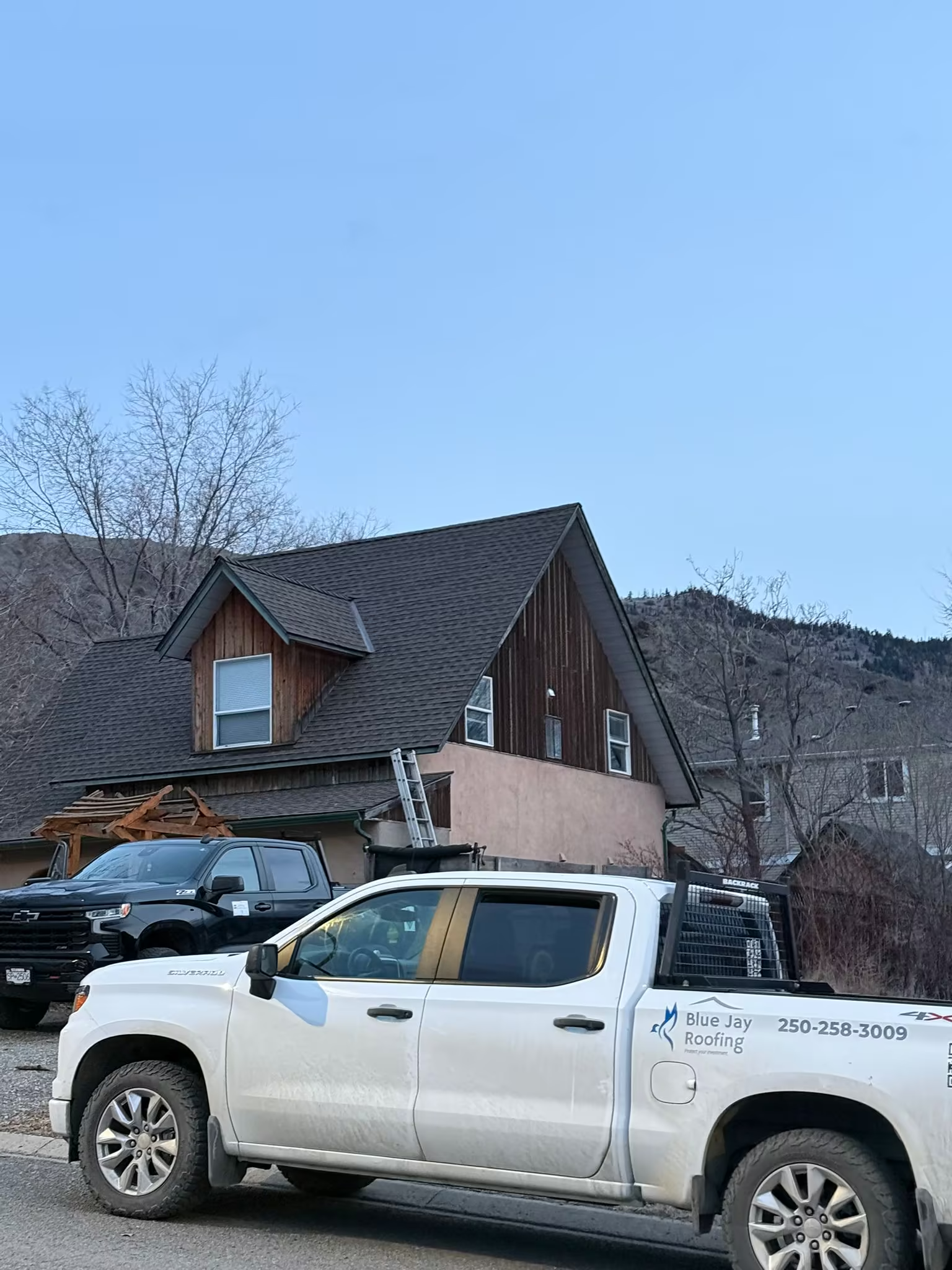
Recent roof ventilation project proof
Published Blue Jay Roofing project stories matched to roof ventilation, generated from approved CRM closeout records and project photos.
FAQ
Common questions
How do I know if my roof has adequate ventilation?
Signs of inadequate ventilation include: excessive heat in upstairs rooms during summer, ice dams forming at the eaves in winter, moisture or frost in the attic, peeling exterior paint, and curling or premature aging of shingles. We assess ventilation during every roof inspection.
Can you add ventilation to an existing roof?
Yes. We can retrofit continuous ridge vents, add soffit vents, or install roof-mounted exhaust vents during a re-roof or as a standalone upgrade. Existing shingles near the ridge are removed, the deck is cut for the vent, and new shingles are installed over the vent edge.
How much ventilation does my roof need?
Building codes typically require 1 square foot of net free ventilation area for every 150-300 square feet of attic floor space, balanced between intake and exhaust. The exact ratio depends on the presence of a vapour barrier and the roof configuration. We calculate the specific requirement for your home.
Interested in roof ventilation?
Get a free estimate from an Okanagan roofing company that puts quality first. Serving Kelowna, West Kelowna, and the Okanagan Valley.